When international investors think of South Korea’s corporate landscape, conglomerates like Samsung, Hyundai, and LG often come to mind first. But nestled within the Samsung Group’s vast empire lies a compelling yet frequently overlooked gem: Hotel Shilla (호텔신라, 008770.KS). As South Korea’s premier luxury hospitality and duty-free retail operator, Hotel Shilla sits at the intersection of several powerful secular trends—rising Asian tourism, growing luxury consumption, and the post-pandemic travel rebound. Here’s why this company deserves a place on every global investor’s radar.

Business Overview: More Than Just a Hotel
Despite its name, Hotel Shilla is far more than a hotel company. Founded in 1973 as part of the Samsung Group, the company operates across two primary business segments that together create a diversified revenue stream rooted in luxury and travel.
- Travel Retail (Duty-Free): This is the company’s largest revenue driver, accounting for the vast majority of total sales. Hotel Shilla operates duty-free stores in prime locations across South Korea, including major airports like Incheon International Airport, as well as downtown flagship stores in Seoul. Through its subsidiary, Shilla Duty Free, the company is one of the top duty-free operators in the world, competing with global giants like Lotte Duty Free and DFS Group. The company also operates duty-free concessions in international locations such as Singapore’s Changi Airport and select locations in Vietnam.
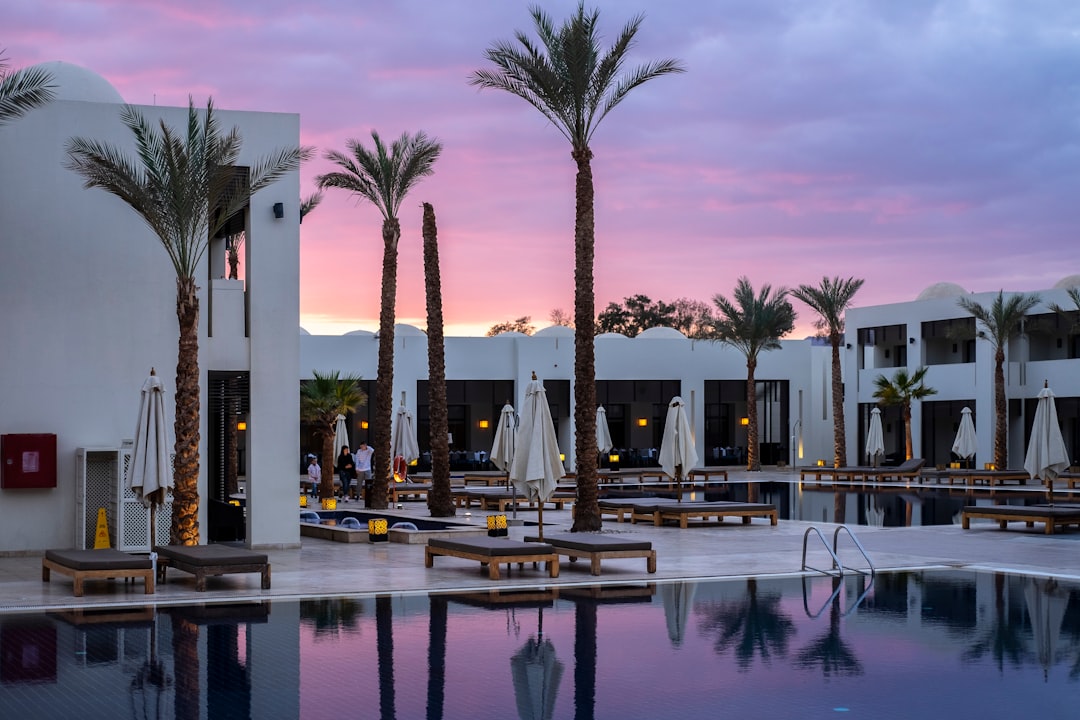
- Hotel & Leisure: Hotel Shilla operates The Shilla Seoul and The Shilla Jeju, two of South Korea’s most prestigious luxury hotels. These properties are consistently ranked among Asia’s finest, hosting heads of state, global business leaders, and high-net-worth travelers. The company also manages the Shilla Stay brand, a line of premium business hotels targeting the upscale yet value-conscious traveler segment, with locations in key Korean cities.
This dual-business model gives Hotel Shilla a unique positioning: the travel retail arm delivers high-volume, transaction-driven revenue, while the hotel division reinforces brand prestige and provides a stable, margin-rich income base.
Recent Performance and the Post-Pandemic Recovery
Like virtually every company in the global travel and hospitality sector, Hotel Shilla was severely impacted by the COVID-19 pandemic. International travel ground to a halt, duty-free foot traffic evaporated, and hotel occupancy rates plummeted. Revenue, which had surpassed KRW 5 trillion in 2019, declined sharply during 2020 and 2021.
However, the recovery story has been meaningful. As borders reopened and international travel resumed—particularly from China and Southeast Asia—Hotel Shilla’s top line began to rebuild. Several key trends have shaped the company’s recent trajectory:
- Tourism Recovery: South Korea has seen a significant rebound in inbound tourism, with Chinese and Japanese visitors returning in increasing numbers. Incheon International Airport, where Hotel Shilla holds prime duty-free concessions, has seen passenger volumes steadily climbing toward pre-pandemic levels.
- Structural Shifts in Duty-Free: The duty-free industry in Korea has undergone consolidation, with weaker players exiting or scaling back. Hotel Shilla has been strategic in renegotiating airport concession terms and optimizing its store portfolio to focus on profitability over sheer volume—a welcome shift for margin-conscious investors.
- Profitability Focus: In recent quarters, management has prioritized operational efficiency. The company has worked to reduce its dependence on low-margin “daigou” (personal shopper/reseller) channels, which historically drove massive top-line revenue but contributed little to the bottom line. By shifting toward higher-margin direct-to-consumer sales and curating a more premium product mix, Hotel Shilla has been improving its earnings quality.
- Hotel Segment Strength: The luxury hotel segment has outperformed, benefiting from revenge travel spending, high-end domestic tourism, and a wave of international events and conferences held in Seoul. The Shilla Seoul, in particular, has commanded strong average daily rates (ADR) and occupancy levels.
That said, the recovery has not been without headwinds. The slower-than-expected return of Chinese group tourists, geopolitical tensions, and a competitive duty-free landscape have kept investors cautious. The stock has traded at a significant discount to its historical valuation multiples, which some analysts view as an opportunity rather than a red flag.
Why International Investors Should Pay Attention
Hotel Shilla presents several attributes that make it an intriguing proposition for international investors looking for exposure to Asian consumer growth and travel recovery themes.
- Samsung Group Affiliation: As a Samsung Group company, Hotel Shilla benefits from the conglomerate’s vast network, brand credibility, and financial backing. The company’s CEO, Lee Boo-jin—the eldest daughter of the late Samsung Group Chairman Lee Kun-hee—is one of South Korea’s most prominent business leaders. Her vision for elevating the Shilla brand into a global luxury name adds a compelling long-term narrative.
- Exposure to Asian Travel Megatrend: Asia-Pacific remains the fastest-growing region for outbound and inbound tourism globally. South Korea, buoyed by the “Korean Wave” (Hallyu) cultural phenomenon encompassing K-pop, K-drama, and Korean cuisine, is attracting record numbers of first-time visitors. Hotel Shilla is among the most direct beneficiaries of this trend.
- Global Duty-Free Expansion: The company is not content to remain a purely domestic player. Its expansion into duty-free operations at international airports positions it to capture growth beyond Korea’s borders. As Asian middle-class spending on luxury goods and travel continues to rise, Hotel Shilla’s international footprint could become a significant value driver.
- Attractive Valuation: After years of pandemic-era underperformance and cautious investor sentiment, Hotel Shilla trades at a valuation that many analysts consider attractive relative to its asset base and long-term earnings potential. For patient investors willing to look through short-term noise, the risk-reward profile may be compelling.
- ESG and Brand Prestige: Hotel Shilla has invested in sustainability initiatives across its hotels and retail operations. Its luxury brand positioning also insulates it somewhat from the race-to-the-bottom pricing pressures that afflict lower-tier hospitality and retail peers.
Of course, risks remain. The duty-free industry is highly competitive, airport concession renewals are never guaranteed, and geopolitical factors—particularly Sino-Korean relations—can have an outsized impact on tourist flows. Currency fluctuations between the Korean won and major trading currencies also introduce an additional layer of complexity for foreign investors.
Conclusion: A Luxury Play on Asia’s Travel Renaissance
Hotel Shilla represents a unique investment thesis: a luxury brand with deep roots in South Korea’s most powerful business dynasty, operating at the nexus of tourism recovery, duty-free retail growth, and the global appetite for premium experiences. While the stock may not offer the explosive growth profile of a tech darling, it provides diversified exposure to some of Asia’s most durable consumer trends.
For international investors seeking to diversify their Korean equity exposure beyond semiconductors and automobiles, Hotel Shilla offers a differentiated entry point into the consumer and hospitality space. As Asia’s travel renaissance continues to unfold, this company is well-positioned to reclaim—and potentially surpass—its pre-pandemic heights.
Disclaimer: This blog post is for informational purposes only and does not constitute financial advice, investment recommendations, or an offer to buy or sell any securities. Investors should conduct their own due diligence and consult with a qualified financial advisor before making any investment decisions. Stock investments carry risk, including the potential loss of principal.