
Introduction: A Biotech Powerhouse from South Korea
When most international investors think of South Korean stocks, their minds immediately go to Samsung, Hyundai, or SK Hynix. But quietly and steadily, one company has been building a global empire in one of the fastest-growing segments of the pharmaceutical industry — biosimilars. That company is Celltrion (셀트리온, 068270.KS), a biopharmaceutical heavyweight listed on the Korea Exchange that has emerged as one of the world’s leading developers and manufacturers of biosimilar drugs.
Founded in 2002 by CEO Seo Jung-jin, Celltrion has grown from a scrappy upstart into a company with a market capitalization frequently exceeding $20 billion, a robust pipeline of biosimilar and novel biologic drugs, and a global commercial footprint spanning over 110 countries. For international investors seeking exposure to the intersection of healthcare innovation and emerging market growth, Celltrion represents one of the most compelling stories on the Korean stock market today.
Business Overview: The Biosimilar Pioneer
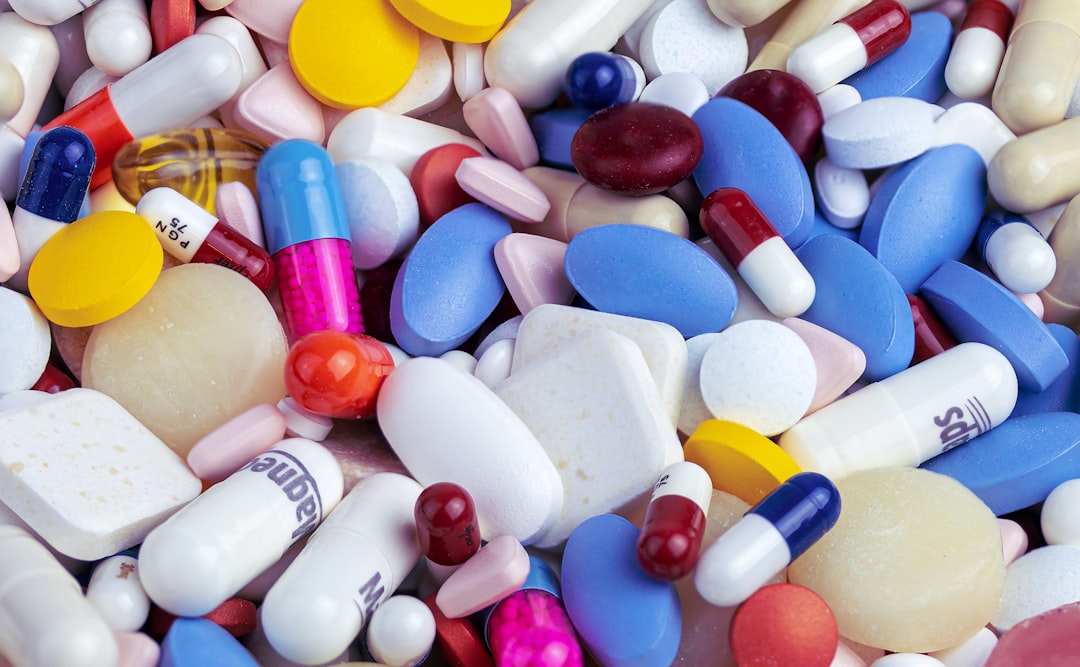
To understand Celltrion’s value proposition, it helps to understand what biosimilars are. Biosimilars are biological medicines that are highly similar to already-approved reference biologic drugs. Think of them as the biologic equivalent of generic drugs — they offer comparable efficacy and safety at significantly lower costs. As patents on blockbuster biologic drugs expire, biosimilars are capturing enormous market share worldwide, driven by cost-conscious healthcare systems eager to reduce spending on expensive treatments.
Celltrion was a first mover in this space. Its flagship product, Remsima (a biosimilar of Johnson & Johnson’s Remicade, known generically as infliximab), made history in 2013 when it became the first monoclonal antibody biosimilar approved by the European Medicines Agency (EMA). This was a watershed moment not just for Celltrion, but for the global biosimilar industry as a whole. Remsima has since been approved in dozens of countries, including the United States (where it is marketed as Inflectra through a partnership with Pfizer), and has generated billions of dollars in cumulative revenue.
But Celltrion is far more than a one-product company. Its portfolio includes:
- Truxima — a biosimilar of Roche’s MabThera/Rituxan (rituximab), used in the treatment of non-Hodgkin’s lymphoma and rheumatoid arthritis.
- Herzuma — a biosimilar of Roche’s Herceptin (trastuzumab), a critical treatment for HER2-positive breast cancer.
- Vegzelma — a biosimilar of Roche’s Avastin (bevacizumab), used in multiple cancer indications, which has been gaining regulatory approvals globally.
- Yuflyma — a biosimilar of AbbVie’s Humira (adalimumab), the best-selling drug in pharmaceutical history, which represents a massive commercial opportunity as Humira’s patent exclusivity has eroded.
Additionally, Celltrion operates one of the largest mammalian cell culture manufacturing facilities in the world, located in Songdo, South Korea. This vertically integrated manufacturing capability gives the company a significant cost advantage and quality control edge over competitors that rely on contract manufacturers.
Recent Performance and the Celltrion–Celltrion Healthcare Merger
One of the most transformative events in Celltrion’s recent history was the completion of its merger with Celltrion Healthcare in 2024. Previously, Celltrion focused on R&D and manufacturing while Celltrion Healthcare handled marketing and distribution. This split corporate structure had long been a source of frustration for investors, who viewed it as unnecessarily complex and a drag on valuation. The merger has created a fully integrated biopharmaceutical company — from drug development through commercialization — streamlining operations, reducing redundancies, and unlocking synergies.
Financially, the combined entity has shown strong momentum. In recent quarters, Celltrion has reported robust revenue growth, fueled by the global expansion of its biosimilar portfolio and the commercial launch of newer products like Yuflyma. The company’s operating margins have also improved as manufacturing efficiencies and economies of scale kick in. Revenue for 2024 surpassed expectations, with the company benefiting from a particularly strong performance in the European and U.S. markets.
Celltrion’s share price has historically been volatile — not unusual for a biotech company — but the post-merger simplification of the corporate structure, combined with improving fundamentals, has led many analysts to view the stock as attractively valued relative to global biosimilar peers. Multiple Korean and international brokerages have issued positive outlooks, citing the company’s strong pipeline, expanding margins, and the structural tailwinds in the global biosimilar market.
Why International Investors Should Pay Attention
There are several compelling reasons why Celltrion deserves a place on every global healthcare investor’s radar:
- Massive addressable market: The global biosimilar market is projected to grow from approximately $30 billion in 2023 to over $100 billion by 2030, according to multiple industry estimates. As healthcare systems worldwide grapple with rising costs, the demand for affordable biologic alternatives will only intensify. Celltrion is positioned at the forefront of this secular trend.
- Humira biosimilar opportunity: AbbVie’s Humira generated peak annual sales of more than $21 billion. With biosimilar competition now firmly underway in both Europe and the United States, Celltrion’s Yuflyma — which notably offers a high-concentration, citrate-free formulation preferred by patients — is well-positioned to capture meaningful market share in what is arguably the largest single-product opportunity in pharmaceutical history.
- Pipeline diversification into novel biologics: Celltrion is not resting on its biosimilar laurels. The company is investing heavily in novel biologic candidates, including treatments for COVID-19, as well as next-generation antibody-drug conjugates (ADCs) and other innovative therapies. This pipeline evolution could significantly expand the company’s growth profile over the medium to long term.
- Improved corporate governance: The merger with Celltrion Healthcare addressed one of the biggest governance concerns investors had. The simplified structure reduces related-party transaction risks, improves transparency, and makes the company more comparable to integrated global pharma peers — potentially warranting a higher valuation multiple.
- Currency and diversification benefits: For international investors, Korean equities offer diversification away from U.S.- and Europe-centric portfolios. With the Korean won often undervalued relative to fundamentals, there may also be a currency tailwind for dollar-based investors over time.
Of course, risks exist. Biosimilar commercialization is highly competitive, with players like Sandoz, Amgen, Samsung Bioepis, and others vying for market share. Regulatory hurdles in new markets, pricing pressure from payers, and the inherent complexity of biologic manufacturing all pose challenges. Additionally, as a Korean-listed stock, Celltrion may carry liquidity and access considerations for some foreign investors, though it is available through most major international brokerages and is a constituent of the KOSPI index.
Conclusion: A Global Contender Worth Watching
Celltrion has come a long way from its humble beginnings in Incheon two decades ago. Today, it stands as one of the world’s premier biosimilar companies, with a proven track record of regulatory success, a deep and diversifying pipeline, world-class manufacturing infrastructure, and a newly streamlined corporate structure. As the global biosimilar market enters its next phase of exponential growth, Celltrion is arguably better positioned than ever to capitalize on this opportunity.
For international investors looking beyond the usual Korean mega-caps and seeking exposure to global healthcare megatrends, Celltrion offers a differentiated and potentially rewarding investment thesis. It is a company that combines